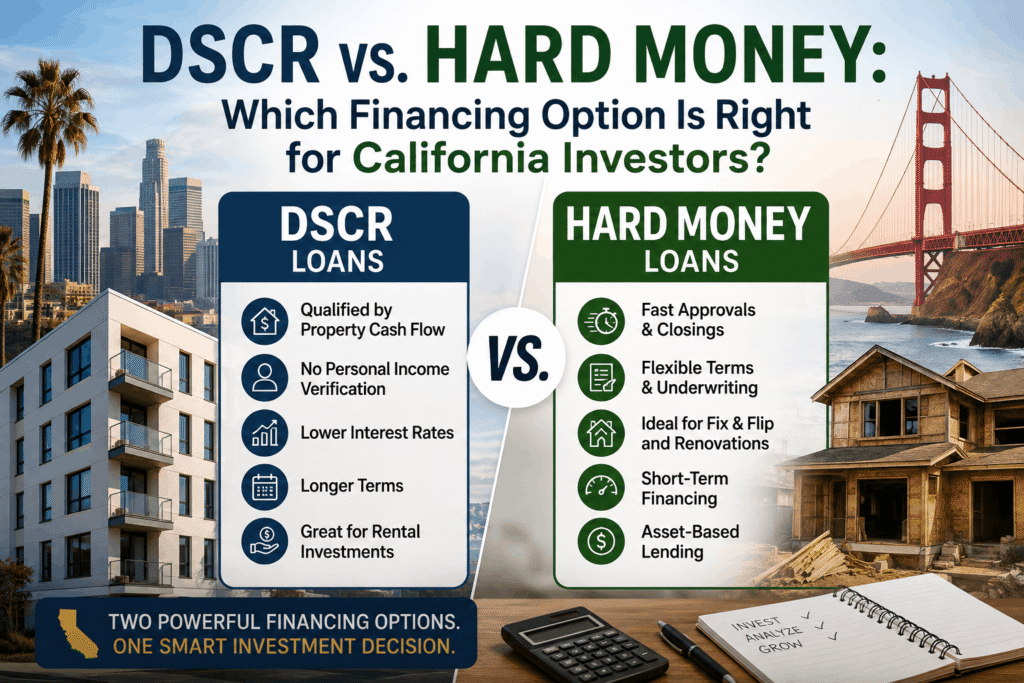
Real estate investors in California have more financing choices than ever. Two options often come up: DSCR loans and hard money loans. Both work differently. Both fit different situations.
This guide breaks down each option. You’ll learn how they work, where they shine, and how to pick the right one for your next deal. At All California Lending, we help investors weigh both paths every day, so let’s walk through what sets them apart.
What Is a DSCR Loan?
DSCR stands for Debt Service Coverage Ratio. This type of loan looks at the income a property generates. It does not focus on your personal income or tax returns.
Lenders calculate DSCR by dividing a property’s rental income by its total debt payments. A ratio above 1.0 means the property earns more than it costs. Most lenders want to see a ratio of 1.0 or higher before approving the loan.
This makes DSCR loans California a popular choice among investors. Self-employed borrowers benefit too. So do people who own multiple rental properties and want to skip the paperwork of traditional mortgages.
How DSCR Loans Work
The approval process centers on the property, not the person. Lenders review rental income, either from a lease or a market rent estimate. They compare that income to the mortgage payment, taxes, and insurance.
If the numbers work, you qualify. Simple as that. There’s no need to prove personal income or submit years of tax returns.
Terms usually range from 15 to 30 years. Rates tend to be higher than conventional loans but lower than hard money. Many DSCR loans also allow properties held under an LLC, which adds a layer of liability protection.
What Is a Hard Money Loan?
Hard money loans come from private lenders instead of banks. They use the property itself as collateral. Approval depends heavily on the property’s value, not the borrower’s credit score or income.
These loans close fast. Some fund in a week or less. That speed makes them useful for time-sensitive deals, like auctions or competitive offers.
However, speed comes at a cost. Interest rates run higher. Loan terms are shorter too, often between six months and three years.
How Hard Money Loans Work
Private investors or small lending companies fund these loans. They care most about the property’s after-repair value, especially for fix-and-flip projects. Down payments tend to be larger, often 20 to 30 percent of the purchase price.
Because approval skips traditional underwriting, borrowers with credit issues can still qualify. This flexibility helps investors who need to move quickly or who don’t fit conventional lending boxes.
Still, the short repayment window means you need an exit strategy. Selling the property or refinancing into a long-term loan are common paths forward.
Key Differences Between the Two
Let’s compare these loan types side by side.
Qualification basis: DSCR loans depend on rental income. Hard money loans depend on property value and a clear exit plan.
Speed: Hard money loans close faster, sometimes in days. DSCR loans take longer, closer to a typical mortgage timeline.
Loan term: DSCR loans offer long-term financing, often 30 years. Hard money loans are short-term, usually under three years.
Interest rates: Hard money loans carry higher rates due to the added risk and speed. DSCR loans sit somewhere between conventional and hard money pricing.
Best use case: DSCR loans suit long-term rental investors. Hard money loans suit flippers and investors needing quick capital.
Interest Rates and Loan Costs
Interest rates vary based on market conditions, loan-to-value ratio, and borrower experience. Generally, DSCR loan rates run a percentage point or two above conventional mortgage rates. Hard money loans often carry rates several points higher still, plus origination fees called “points.”
These points can range from one to five percent of the loan amount. Combined with higher interest, hard money financing becomes expensive over time. That’s why most investors treat it as a bridge, not a permanent solution.
DSCR loans, on the other hand, work well as buy-and-hold financing. The rate might be higher than a traditional mortgage, but the long-term structure keeps monthly payments predictable.
Approval Speed and Documentation
Documentation requirements differ sharply between these two loan types. DSCR loans still require some paperwork. Expect to provide a lease agreement or rent survey, an appraisal, and basic entity documents if borrowing through an LLC.
Hard money loans require far less. Lenders mostly want proof of the property’s value and your plan for repayment. This lighter documentation load is exactly why closings happen so quickly.
Timeframes reflect this difference. DSCR loans typically close in three to four weeks. Hard money deals can close in as little as five to ten days.
Which Loan Fits Your Strategy?
Your investment goal should drive this decision. Are you building a rental portfolio? Do you plan to hold properties for years? A DSCR loan likely makes more sense.
Are you flipping a property or buying at auction with a tight deadline? Hard Money Loans California give you the speed and flexibility to compete. Just remember, this financing works best as a short-term tool.
Some investors use both strategies together. They might buy a distressed property with hard money, renovate it, then refinance into a DSCR loan once it’s rented out. This approach, known as the BRRRR method, combines speed with long-term stability.
Pros and Cons at a Glance
DSCR Loan Pros:
- No personal income verification required
- Long-term, predictable payments
- Works well for portfolio growth
- LLC ownership allowed
DSCR Loan Cons:
- Slower closing process
- Requires positive cash flow
- Rates higher than conventional loans
Hard Money Loan Pros:
- Fast closing, often within days
- Flexible approval standards
- Great for time-sensitive purchases
Hard Money Loan Cons:
- High interest rates and fees
- Short repayment terms
- Requires a solid exit strategy
Risks to Consider
Every loan type carries risk. With DSCR loans, a vacant property or falling rents can hurt your qualifying ratio on future loans. Lenders may hesitate to approve additional financing if your existing properties underperform.
Hard money loans carry a different risk. If your project stalls or the market shifts, you might struggle to sell or refinance before the loan term ends. That could lead to costly extensions or even default.
Therefore, always plan conservatively. Build in extra time and budget for unexpected costs, whether you’re renovating a flip or stabilizing a rental.
Final Thoughts
Choosing between these two loan types comes down to timeline and strategy. Long-term investors chasing steady rental income usually lean toward DSCR financing. Investors chasing speed, flexibility, or a quick flip often turn to hard money instead.
Both options serve real purposes in California’s competitive real estate market. Understanding how each one works helps you match the right tool to the right deal. Talk with a lender who specializes in investment financing before committing, since terms and requirements can vary widely between companies.
Whichever path you choose, make sure the numbers work before you sign. A good deal on paper should still make sense when the loan terms are in place.
If you’d like guidance on which loan fits your next investment, reach out to All California Lending. Our team works with investors across the state to structure financing that matches their strategy.